You're buying a sex toy – and suddenly you're faced with a material question that hardly anyone explains. Silicone, TPE, glass, metal, ABS plastic, wood, ceramic... What's safe? What lasts a long time? What feels best? And what should you absolutely not buy?
 Dildo Ouch Inflatable Vibrating Silicone Black 15.7 x Ø 4.6 cm
€53,99
Dildo Ouch Inflatable Vibrating Silicone Black 15.7 x Ø 4.6 cm
€53,99 Realistic Dildo RealRock Crystal Clear Straight with a Suction Foot TPE 20 x Ø 4 cm
€19,99
Realistic Dildo RealRock Crystal Clear Straight with a Suction Foot TPE 20 x Ø 4 cm
€19,99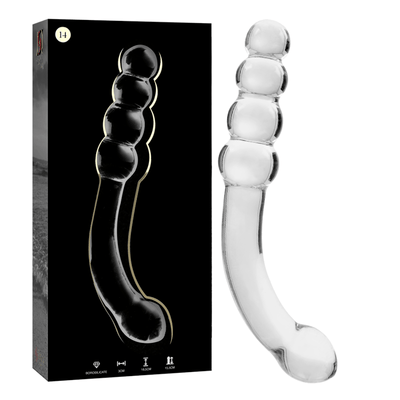 Glass Dildo Nebula Model 14 Transparent 18.5 x 3 cm
€29,99
Glass Dildo Nebula Model 14 Transparent 18.5 x 3 cm
€29,99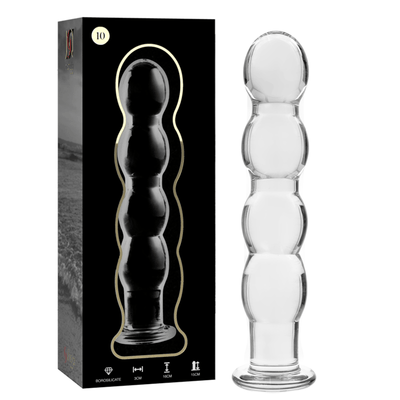 Glass Dildo Nebula Model 10 Transparent 16 x 3 cm
€29,99
Glass Dildo Nebula Model 10 Transparent 16 x 3 cm
€29,99 Butt Plug Metal LED with Remote Control M 8.9 x 3.8 cm
€38,99
Butt Plug Metal LED with Remote Control M 8.9 x 3.8 cm
€38,99 Anal Plug Metal with a Crystal Blue size S 3.3 cm
€11,99
Anal Plug Metal with a Crystal Blue size S 3.3 cm
€11,99This guide gives you all the answers – clear, honest, and without marketing jargon.
🧪 1. Why Material Is So Important
The material of your sex toy is not a minor detail – it determines:
- Safety: Some materials release harmful substances (phthalates, BPA)
- Hygiene: Porous materials are not sterilizable and can harbor bacteria
- Feel & Sensation: Soft, firm, warm, cold – each material feels different
- Durability: Some toys last years, others crumble after months
- Lubricant Compatibility: The wrong lubricant can destroy the material
- Cleaning Effort: Not all materials are equally easy to disinfect
The most important distinction: porous vs. non-porous.
- Non-porous: Silicone, glass, metal, ABS plastic → hygienic, sterilizable
- Porous: TPE, TPR, PVC, latex → hard to clean, bacteria can settle
🧪 2. Silicone – The Gold Standard
Medical-grade silicone is the most commonly recommended material for sex toys – and for good reason.
Properties:
- Non-porous → hygienic and sterilizable
- Skin-friendly, hypoallergenic
- Body-warm – adapts to body temperature
- Flexible and soft, yet shape-stable
- Odorless (with high-quality products)
- Durable – lasts for many years with good care
Advantages:
- ✅ Safe for the body (body-safe)
- ✅ Can be boiled or sterilized with sex toy cleaner
- ✅ Pleasant, velvety feel
- ✅ No leaching of harmful substances
- ✅ Many hardness levels available (from very soft to firm)
Disadvantages:
- ❌ More expensive than TPE/PVC
- ❌ Not compatible with silicone-based lubricant (destroys the surface)
- ❌ Attracts dust and lint
Ideal for:
Anyone who values safety, hygiene, and durability. Especially recommended for anal toys, as these require particularly thorough cleaning.
Lubricant:
⚠️ Only use water-based lubricant. Silicone-based lubricant attacks the surface and makes the toy porous.
Cleaning:
Boiling (without vibrator electronics), dishwasher (top rack, without electronics), or with sex toy cleaner. Allow to dry completely.
🧪 3. TPE / TPR – Soft, Affordable, but with Catches
TPE (Thermoplastic Elastomer) and TPR (Thermoplastic Rubber) are the most common materials in the mid to lower price range. They often feel very realistic – soft, flexible, skin-like.
Properties:
- Porous → not fully sterilizable
- Very soft and flexible
- Often skin-colored and realistically textured
- Cheaper to manufacture
- May have its own odor
Advantages:
- ✅ Very realistic feel
- ✅ Affordable
- ✅ Soft and pleasant
- ✅ Phthalate-free (with high-quality TPE products)
Disadvantages:
- ❌ Porous – bacteria can settle in micropores
- ❌ Cannot be boiled or sterilized
- ❌ Can become brittle over time or "sweat" (plasticizers leach out)
- ❌ Sensitive to heat and some lubricants
- ❌ Not suitable for sharing without a condom
Ideal for:
Beginners on a budget, solo use, if the toy is replaced regularly. Less recommended for anal toys.
Lubricant:
✅ Water-based and silicone-based lubricants are generally compatible. Always test beforehand.
Cleaning:
Only with mild soap and lukewarm water or sex toy cleaner. Do not boil. Allow to dry completely, store dry.
🧪 4. Glass – Underestimated and Brilliant
Glass sex toys are one of the most underestimated products on the market. Once you've tried a high-quality glass dildo, you'll understand the enthusiasm.
Properties:
- Non-porous → perfectly hygienic
- Borosilicate glass (like Pyrex) – extremely robust and temperature-resistant
- Smooth, hard surface
- Temperature play possible (warm or cold)
- Heavier than silicone or TPE
Advantages:
- ✅ Fully sterilizable (boiling, dishwasher)
- ✅ Compatible with ALL lubricants
- ✅ Temperature play: cool in the refrigerator or warm in hot water
- ✅ Extremely durable – lasts a lifetime with proper care
- ✅ Precise G-spot and prostate stimulation due to hard surface
- ✅ Aesthetic – many glass dildos are true works of art
Disadvantages:
- ❌ Can break with a hard impact (dropping on hard floors)
- ❌ No flexibility – uncomfortable for some
- ❌ Cold on first contact (can also be an advantage)
- ❌ More expensive than TPE
Safety note:
Check for cracks or chips before each use. Borosilicate glass is very robust – but dispose of it immediately if there are visible damages.
Ideal for:
Advanced users seeking precise stimulation. Perfect for G-spot and prostate. Ideal for temperature play. Also for couples, as it's fully sterilizable.
Lubricant:
✅ All lubricants compatible – water-based, silicone, oil-based.
Cleaning:
Boiling, dishwasher, sex toy cleaner – all possible. The easiest material to care for.
🧪 5. Metal – Heavy, Precise, Luxurious
Stainless steel and aluminum sex toys are the royalty among hard materials. Heavy, cold, precise – and absolutely unbeatable for the right person.
Properties:
- Non-porous → perfectly hygienic
- Mostly surgical stainless steel (316L) or aluminum
- Very heavy and firm
- Smooth, polished surface
- Temperature play possible
- Extremely durable
Advantages:
- ✅ Fully sterilizable
- ✅ Compatible with ALL lubricants
- ✅ Temperature play: ice water or warm water
- ✅ Most intense pressure stimulation due to weight
- ✅ Virtually indestructible
- ✅ Ideal for BDSM and weight stimulation
- ✅ Luxurious look and feel
Disadvantages:
- ❌ No flexibility – takes getting used to
- ❌ Heavy – not comfortable for everyone
- ❌ Cold on first contact
- ❌ Expensive (high-quality models)
- ❌ For nickel allergy: ensure nickel-free stainless steel
Ideal for:
Experienced users, BDSM enthusiasts, anyone who loves intense pressure stimulation. Metal anal plugs are particularly popular – the weight creates a unique sensation.
Lubricant:
✅ All lubricants compatible.
Cleaning:
Boiling, dishwasher, alcohol – all possible. Like glass, the easiest material to care for.
🧪 6. ABS Plastic – The All-Rounder
ABS (Acrylonitrile Butadiene Styrene) is a hard, non-porous plastic often used for vibrator casings and toys that don't require flexibility.
Properties:
- Non-porous → hygienic
- Hard and shape-stable
- Lightweight
- Cheap to manufacture
- BPA-free (with high-quality products)
Advantages:
- ✅ Body-safe and non-porous
- ✅ Affordable
- ✅ Lightweight and handy
- ✅ Good for vibrator casings
Disadvantages:
- ❌ Hard – no flexibility
- ❌ No temperature play possible
- ❌ Less luxurious feel than silicone or metal
- ❌ Only water-based lubricant recommended
Ideal for:
Vibrators, clitoral stimulators, toys where flexibility is not an issue.
🧪 7. Materials You Should Avoid
Not all materials on the market are safe. You should actively avoid these:
| Material | Problem | Identifying features |
|---|---|---|
| PVC / Vinyl | Often contains phthalates (endocrine disruptors), porous | Cheap rubber smell, very cheap |
| Latex | Allergy risk, porous | Rubbery, latex smell |
| Jelly / Cyberskin | Porous, often phthalates, "sweats" plasticizers | Very soft, sticky, strong odor |
| Cheap TPE without certification | Unknown additives, porous | No manufacturer's proof, very cheap |
Rule of thumb: If a toy has a strong smell (chemical, rubbery), that's a warning sign. High-quality materials are odorless or have very little odor.
📊 8. Large Comparison Table
| Property | Silicone | TPE/TPR | Glass | Metal | ABS |
|---|---|---|---|---|---|
| Body-safe | ✅ Yes | ⚠️ Mostly | ✅ Yes | ✅ Yes | ✅ Yes |
| Non-porous | ✅ Yes | ❌ No | ✅ Yes | ✅ Yes | ✅ Yes |
| Sterilizable | ✅ Yes | ❌ No | ✅ Yes | ✅ Yes | ⚠️ Partially |
| Flexibility | ✅ High | ✅ High | ❌ None | ❌ None | ❌ None |
| Temperature Play | ❌ No | ❌ No | ✅ Yes | ✅ Yes | ❌ No |
| Silicone-based Lube | ❌ No | ⚠️ Test | ✅ Yes | ✅ Yes | ❌ No |
| Durability | ✅ Very High | ⚠️ Medium | ✅ Very High | ✅ Very High | ✅ High |
| Price | 💰💰 Medium-High | 💰 Affordable | 💰💰 Medium-High | 💰💰💰 High | 💰 Affordable-Medium |
| Feel | Velvety, soft | Realistic | Smooth, hard | Smooth, heavy | Hard, smooth |
💧 9. Lubricant Compatibility
The wrong lubricant can permanently damage your toy. Here's an overview:
| Material | Water-based | Silicone-based | Oil-based |
|---|---|---|---|
| Silicone | ✅ | ❌ Never! | ⚠️ Not Recommended |
| TPE/TPR | ✅ | ⚠️ Test | ❌ No |
| Glass | ✅ | ✅ | ✅ |
| Metal | ✅ | ✅ | ✅ |
| ABS | ✅ | ❌ Not Recommended | ❌ No |
Universal rule: Water-based lubricant is always safe – for any material. When in doubt, always choose water-based.
🧼 10. Cleaning & Care by Material
| Material | Soap & Water | Sex Toy Cleaner | Boiling | Dishwasher |
|---|---|---|---|---|
| Silicone (without electronics) | ✅ | ✅ | ✅ | ✅ |
| TPE/TPR | ✅ | ✅ | ❌ | ❌ |
| Glass | ✅ | ✅ | ✅ | ✅ |
| Metal | ✅ | ✅ | ✅ | ✅ |
| ABS | ✅ | ✅ | ❌ | ❌ |
Important: Never boil or put toys with built-in vibrators or electronics in the dishwasher – even if the outer material would allow it.
🧪 11. Buying Guide – Which Material for Whom?
You're a beginner on a budget:
→ TPE for a start, but pay attention to phthalate-free quality. Switch to silicone in the medium term.
You want the safest and most hygienic material:
→ Medical-grade silicone. No compromise, especially for anal toys.
You love intense, precise stimulation (G-spot, prostate):
→ Glass or metal. The hard surface hits spots that soft materials miss.
You want to try temperature play:
→ Glass or metal. Both absorb and retain temperature perfectly.
You're active in the BDSM scene:
→ Metal for weight stimulation, plugs, and control. Silicone for comfort during extended use.
You want a toy that lasts a lifetime:
→ Glass or metal. Virtually indestructible with proper care.
You share toys with a partner:
→ Silicone, glass, or metal – only non-porous, sterilizable materials. Or use a condom over TPE toys.
💡 Not sure what suits you? Our sex toy advisor finds matching toys from our range in just 3–4 quick questions – discreet and without sign-up. How it works is explained in Which sex toy suits me?
❓ 12. FAQ
Is silicone always safe?
Medical-grade or body-safe silicone, yes. Cheap "silicone" can contain fillers. Identifying feature: High-quality silicone toys are odorless and leave no indentation when pressed with a fingernail (silicone springs back, TPE remains indented).
Can glass really break?
Borosilicate glass (Pyrex quality) is extremely robust – more robust than regular glass. It does not break from normal use, only from a hard impact on hard surfaces. Briefly check for cracks before each use.
How do I recognize high-quality silicone?
Fingernail test: Press your fingernail into the material. Silicone will immediately spring back and leave no lasting indentation. TPE will remain indented for a short time. Also: no chemical odor, matte or velvety surface.
Can I use silicone-based lubricant with silicone toys?
No – this is one of the most common mistakes. Silicone-based lubricant attacks the surface of silicone toys and makes them porous. Always use water-based lubricant with silicone toys.
Which material is best for anal toys?
Silicone, glass or metal – exclusively non-porous materials. Anal toys must be able to be cleaned particularly thoroughly. TPE is not recommended for anal toys.
Are metal toys suitable for beginners?
Small metal anal plugs are also suitable for beginners – their weight and smooth surface even make insertion easier. Larger metal dildos are more for advanced users.
✅ 13. Conclusion
Choosing the right material is one of the most important decisions when buying a sex toy – and it depends on your priorities:
- Safety & Hygiene first: Silicone, glass or metal
- Realistic feel on a budget: High-quality TPE (phthalate-free)
- Precise stimulation & temperature play: Glass or metal
- Durability & investment: Glass or metal
- Flexibility & comfort: Silicone
Our clear recommendation: It's better to invest once in a high-quality silicone, glass or metal toy than multiple times in cheap TPE products that you have to replace regularly. Your body will thank you.
🛍️ Discover matching products:
- Glass Dildo Model 24 Pink 28.5 cm
- Realistic Dildo Hyperrealistic Bendable Natural 14.8 x 3.1 cm
- Anal Plug Plug 10 Vibrations Metal Dildo with Remote Control M 11.8 cm
- Lay-on Vibrator Switch x Clitoral Stimulator 6 Levels Orange
- Dildo Dizi with Suction Cup 18 x 3.5 cm
🛒 Matching products in our shop
Want to browse straight away? Everything this article is about:
- Glass + Ceramic Dildos – temperature play, glass-smooth
- Anal plugs – from slim to advanced
- Dildos – realistic, classic, extreme